How Art Can Be Used to Launder Human Trafficking
We reviewed how transnational criminal organizations and terrorist groups traffic goods such every bit illegal drugs, engage in homo trafficking, and launder money. We also looked at the information sharing used to assistance observe these activities.
Responsibleness for combating trafficking is spread beyond multiple federal agencies. Agencies collaborate via task forces that share information and resources with each other, the private sector, and foreign counterparts. The U.Southward. Treasury Department, for example, shares information with more than 160 international financial intelligence agencies.
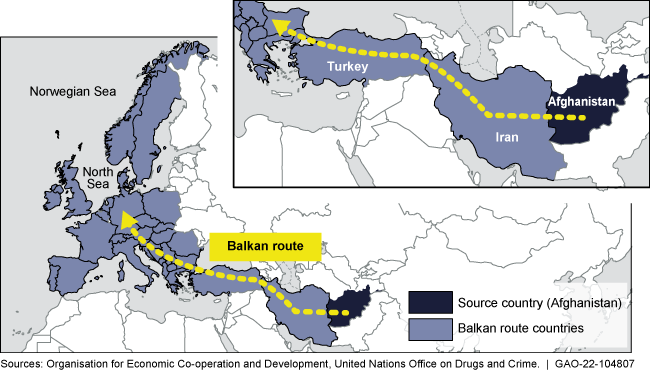
Criminal groups move heroin and more from Afghanistan to western Europe via the Balkan route.
Skip to Highlights
What GAO Found
Federal agencies and others have reported that money laundering strategies used by transnational criminal organizations and terrorist groups include sophisticated techniques such equally phony trade transactions or purchase and resale of real manor or fine art. Such techniques can involve the services of professional money laundering networks or service providers in legitimate professions, such equally complicit lawyers or accountants. For example, lawyers or accountants can create shell companies (entities with no business operations) to help criminals launder illicit proceeds. Transnational criminal organizations and terrorist groups also proceed to smuggle cash in bulk or transmit money electronically across borders.
Federal efforts to combat trafficking and coin laundering incorporate multiple collaborative and information-sharing mechanisms and include the individual sector.
- Constabulary enforcement agencies collaborate through task forces in which they share information and analytical resources to help in the investigation and prosecution of drug and other trafficking-related crimes.
- Federal agencies share intelligence with strange counterparts. For instance, the Financial Crimes Enforcement Network (FinCEN), a bureau of the Department of the Treasury, shares data with more than 160 international financial intelligence agencies.
- FinCEN collaborates with law enforcement agencies to share information with financial institutions on "cherry flags" for trafficking, which institutions can employ to identify and written report suspicious transactions (see box below).
- FinCEN also coordinates a voluntary program that allows financial institutions to share information with ane some other to meliorate identify and report suspicious activities that may exist related to coin laundering or other illicit financing.
Examples of Human Trafficking "Red Flag" Indicators Provided to Fiscal Institutions
- Involvement of a third party who speaks for the client, insists on existence present for transactions, or acts aggressively toward the customer.
- Frequent customer transactions from different U.Southward. geographical regions.
- Transactions that are inconsistent with a client's expected activity.
- Client accounts that share a telephone number or other identifiers with escort bureau websites or commercial sex advertisements.
- Frequent sending or receipt of funds via cryptocurrency to or from internet addresses associated with illicit activity.
Source: GAO analysis of Fiscal Crimes Enforcement Network information. | GAO-22-104807
These mechanisms help address some of the challenges involved in combatting trafficking and money laundering, which include the increasingly sophisticated strategies of criminal and terrorist groups and the fragmentation of responsibility for anti-trafficking efforts among many federal agencies.
Why GAO Did This Written report
FinCEN identified trafficking activity of transnational criminal organizations and terrorist groups as among the nearly significant illicit finance threats facing the United states of america in its 2021 Anti-Money Laundering and Countering the Financing of Terrorism National Priorities. Congress included a provision in the National Defense Potency Human action for Fiscal Year 2021 for GAO to review trafficking and related coin laundering and federal efforts to gainsay them.
Among its objectives, this written report describes what is known near the money laundering strategies of transnational criminal organizations and terrorists and information-sharing efforts among federal agencies to combat trafficking.
GAO reviewed documentation from Treasury and other federal agencies, international and nonprofit organizations focused on trafficking or coin laundering, scholarly journals, and prior GAO piece of work. GAO examined federal guidance to financial institutions and interviewed federal bureau officials; experts in trafficking, coin laundering, and use of data technology; and representatives of merchandise groups for lawyers and accountants. GAO also interviewed five groups of financial institution representatives almost identifying trafficking-related suspicious activities.
For more information, contact Michael E. Clements at (202) 512-8678 or clementsm@gao.gov.
Full Report
Source: https://www.gao.gov/products/gao-22-104807

Post a Comment for "How Art Can Be Used to Launder Human Trafficking"